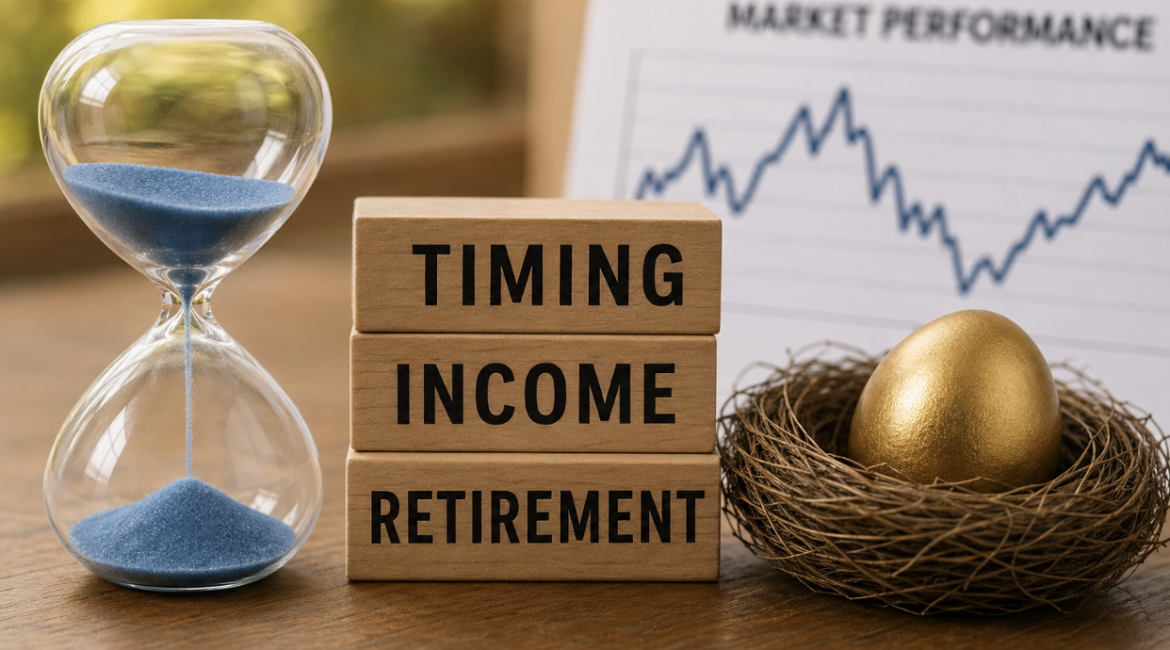
Retirement changes your relationship with money in a way most people don’t expect.
It’s no longer about how your portfolio performs on paper, it’s about whether it can reliably fund your life.
When the market drops, there’s no longer a paycheck cushioning the impact.
There’s only your plan… and how long it holds up.
Retirement changes that equation.
Once your portfolio becomes responsible for producing income, market volatility begins to feel much more personal. Questions that once seemed distant suddenly become very real:
Should I continue taking withdrawals right now?
What happens if this downturn lasts longer than expected?
Will my retirement savings last as long as I need them to?
Am I paying more taxes than necessary?
These concerns highlight an important truth: retirement planning isn’t just about growing assets. It’s about creating a coordinated strategy that can support your lifestyle through changing market conditions, tax laws, and income needs.
This is where coordinated planning becomes essential bringing together Retirement Income Planning, Investment Management, and Financial Planning into one unified strategy.
The Challenge Most Retirees Don’t See Coming
One of the most overlooked risks in retirement is something known as sequence-of-returns risk.
Sequence-of-returns risk occurs when market declines happen early in retirement while you’re actively taking withdrawals from your accounts.
When withdrawals are made during market downturns, investments may need to be sold at lower values. Those assets no longer have the opportunity to participate in future market recoveries, which can have a lasting impact on the longevity of retirement savings.
The market may eventually recover.
But the dollars withdrawn during the downturn don’t.
That’s why many retirees shift their focus from accumulation to income-focused retirement planning, often while reviewing their Retirement Income Planning strategy alongside broader portfolio decisions.
Retirement Income Requires a Different Strategy
Building wealth and generating retirement income are two very different objectives.
During your working years, your primary goal may have been maximizing growth. In retirement, the focus often shifts toward balancing growth, income, and preservation.
A successful retirement strategy should consider:
- Income needs today
- Potential market volatility
- Future tax obligations
- Healthcare and Medicare costs
- Long-term legacy goals
Many retirees discover that retirement isn’t simply about achieving the highest possible return. It’s about creating a plan that can support their lifestyle through both favorable and challenging market environments.
This is where coordinated use of Financial Planning, Investment Management, and Retirement Income Planning becomes critical.
Taxes Can Have a Bigger Impact Than Many Expect
Many retirees spend years preparing for market risk but often underestimate tax risk.
Yet taxes may become one of the largest expenses retirees face throughout retirement.
Different sources of retirement income are taxed differently:
- IRA accounts and 401(k)s are generally taxed as ordinary income
- Roth IRAs may allow tax-free qualified withdrawals
- Social Security benefits may be partially taxable depending on income levels
- Investment income may receive different tax treatment
Understanding how these sources interact is essential.
That’s why many retirement strategies incorporate Tax Planning & Tax-Efficient Strategies to help manage withdrawals and improve long-term efficiency.
Preparing for Required Minimum Distributions (RMDs)
Many retirees eventually face Required Minimum Distributions (RMDs), which require withdrawals from certain retirement accounts.
For individuals with significant retirement savings, these mandatory distributions can create unexpected tax consequences if not planned for properly.
RMDs may impact:
- Social Security taxation
- Medicare premium calculations
- Overall retirement tax efficiency
Proper planning within IRA accounts and coordinated withdrawal strategies can help reduce surprises and improve long-term outcomes.
Why Roth Conversions Continue to Gain Attention
For some retirees, Roth conversions may offer an opportunity to improve future tax flexibility.
A Roth conversion moves assets from a traditional retirement account into a Roth IRA. Taxes are generally due at the time of conversion, but future qualified withdrawals may be tax-free.
Potential benefits may include:
- Tax-free qualified withdrawals
- Reduced future RMD exposure
- Greater flexibility in retirement income planning
- Potential legacy planning advantages
However, Roth conversions are not one-size-fits-all solutions. They should be evaluated within the context of Tax Planning & Tax-Efficient Strategies, current income levels, and long-term retirement goals.
Don’t Overlook Old Retirement Accounts
Retirement often brings financial transitions, especially when managing accounts from previous employers.
Evaluating old 401(k) Rollovers may help simplify management, reduce fragmentation, and create a more coordinated retirement strategy.
Consolidating accounts into IRAs may also improve visibility and help align investments with a broader retirement income plan.
Protecting the Income You Depend On
While growth remains important, many retirees also begin to prioritize protection and stability as they transition into retirement.
Unexpected events, health changes, market downturns, or long-term care needs, can significantly impact retirement income.
This is where tools such as Life Insurance and Long-Term Care planning can play a role in helping protect assets and reduce financial strain on a retirement portfolio.
When integrated properly, these strategies support the broader goal of income stability and long-term confidence.
Balancing Growth and Stability
A portfolio that is too conservative may struggle to keep pace with inflation over time. A portfolio that is too aggressive may expose retirees to unnecessary volatility.
Many retirees discover that retirement isn’t about choosing between growth and safety, it’s about creating balance.
A coordinated approach using Investment Management helps align risk levels with income needs, time horizon, and market conditions.
The goal isn’t to eliminate risk entirely.
The goal is to ensure risk is intentional and aligned with your retirement strategy.
Planning Beyond Your Lifetime
Retirement planning isn’t only about income.
Many retirees also want confidence that their assets will be transferred efficiently to loved ones or charitable causes.
Incorporating Estate Planning into a broader financial strategy can help ensure assets are passed on according to your wishes while maintaining tax efficiency and clarity.
Final Thoughts: Is Your Plan Built for Retirement?
Many people spend decades focused on growing their retirement accounts.
Retirement introduces a different challenge: turning those assets into sustainable income while managing taxes, market volatility, and long-term financial goals.
The question isn’t simply whether the market will recover.
The question is whether your retirement income strategy is designed to withstand the periods when markets don’t cooperate.
Understanding sequence-of-returns risk, tax-efficient withdrawal strategies, RMD planning, Roth conversion opportunities, and coordinated investment decisions all play an important role in retirement success.
Retirement isn’t just about how much you’ve saved.
It’s about how effectively your plan supports the life you’ve worked hard to build.
Ready to Evaluate Your Retirement Income Strategy?
RCM Retirement Capital Management helps individuals transition from accumulation to income-focused retirement planning through coordinated financial strategies that integrate investments, retirement income, and long-term planning.
If you’re approaching retirement or already retired, now may be the right time to evaluate whether your current plan is designed for both growth and income stability.
Explore RCM’s full Financial Services here:
https://www.rcm-income.com/
This article is intended for educational purposes only and should not be considered tax, legal, or financial advice. Individuals should consult qualified professionals regarding their specific financial situation.